
Japan’s rainy season, or “Tsuyu,” is a charming and magical time to visit this fascinating nation. Every summer, when summer starts, the rainy season arrives with its unpredictable weather and colorful natural beauty. While the concept of Tsuyu in Japan may sound somewhat intimidating, most travel industry experts assert that if you have appropriate preparation and knowledge of the quirks of the season and how to cope with them, it’s actually an utterly fantastic time to travel around Japan.
In this article, we’ll give you a tour of the inside scoop on the Japan’s rainy season, and we’ll outline why exactly it’s such a great time to go. Then grab your parasol and let’s go for this wet adventure – you’ll be enchanted strolling around Japan during the soft rain.
Does Japan Have a Rainy Season & What is Rainy Season in Japan
Japan indeed has its rainy season, due to the fact that it happens when plums are ripening. Japan’s rainy season typically runs from early June to mid-July, with high humidity and lots of rain, impacting most of Japan. This relentless downpour is because cold northern air and warm southern air interact, leading to a pretty uniform and unpredictable weather pattern throughout Japan during rainy season.
Also, keep in mind that there is a rainy season in Japan, and then, from late August to September, Japan has typhoon season. Typhoons are strong tropical storms that blow in with strong winds and heavy rain. Typhoon rain is much stronger and more unpredictable than the Japan’s rainy season showers. So, if you’re planning a trip then, monitor the weather forecast and make arrangements for any changes.
When is Rainy Season in Japan
When does Rainy Season Start in Japan
The Japan’s rainy season typically starts in early summer, and the exact time differs from location to location.
In most areas, like Tokyo, the rainy season is from early June to mid-July. But in more southern locations like Okinawa, the Japan’s rainy season may start a bit earlier, sometimes in May. Up north in Hokkaido, it begins later, but overall, the rainy season begins in June. Each year, meteorological agencies forecast and announce the precise starting date based on the weather.
When does Japan Rainy Season End
The months of Japan rainy season end differently depending on where you are within Japan. The Kanto region, where Tokyo is situated, has the rainy season ending around July 19. A little earlier to the south. And further north in Hokkaido, it ends later.
How Long is the Rainy Season in Japan
Japan’s rainy season typically lasts from one to one and a half months. During the period, tourist destinations all over Japan see ample humidity and frequent rain. Towards the later part of the rainy season, the gray clouds turn brilliant blue, and Japan sees a huge increase in temperature, the onset of summer.
Meteorological Agency:
| Area | Beginning of Rainy Season | End of Rainy Season |
| Okinawa | May 10 | June 21 |
| Southern Kyushu (Kagoshima, Miyazaki) | May 30 | July 15 |
| Shikoku (Kochi, Kagawa, Tokushima) | June 5 | July 17 |
| Kinki (Nara, Hyogo, Wakayama) | June 6 | July 19 |
| Kanto (Tokyo, Shizuoka, Kanagawa, Chiba, Ibaraki) | June 7 | July 19 |
| Northern Tohoku (Yamagata, Akita, Iwate, Aomori) | June 15 | July 28 |
What to Expect in Japan in Rainy Season
In Japan’s rainy season, the weather is changing every second, switching between sunny spells and rain. While it does not rain every day, Tokyo has rain on approximately 45% of days at the peak of the rainy season, and only around 27% are fair weather. When the rain eventually comes, half the time it is a light drizzle, and the other half, a full-on downpour.
If you are stuck indoors because of the rain, no worries. Spots within such as museums, temples, shrines, castles, shopping malls, cafes, and hot springs provide an additional appeal during rainy days. The rainy season high humidity will present some inconveniences and facilitate mold development at a faster rate. One needs to take care of his or her belongings and ensure that they are not damp, such as drying up luggage and bags.
One must also keep food refrigerated appropriately. When you are visiting Japan during the rainy season, it is best to plan ahead for the rainy days. While rain does come in Japan at other times as well, it is never actually very heavy. But between May and July, when it rains, it pours, and you will perspire a great deal because of the humidity. Luckily, the majority of shops and indoor businesses in Japan are air-conditioned.
Average Temperatures and What to Wear in Japan Rainy Season
In Tokyo during Japan’s rainy season, the average high is approximately 26 degrees in June, whereas the average low falls to about 19 degrees. The weather in the Japan’s rainy season is extremely unpredictable; on a sunny day, you can feel warm, but as soon as the rain comes, you will feel a chill.
Short-sleeved shirts are the norm, but packing a light jacket or cardigan for the evening or rainy season is advisable.
If you can, it’s a good idea to bring your own raincoat, and maybe even rain boots, depending on what you have scheduled while traveling in Japan during rainy season. It’s a bit tricky to pack for rainy season with the temperature changes. It’s always best to have short-sleeve and long-sleeve shirts, shorts and longs, and of course a jacket for the chilly seasons.
What to Do in Japan during Rainy Season
Stop by the Kanda Myojin Shrine
To get clear skies during your Japan tours, head to the Kanda Myojin Shrine in Tokyo. While it is a shrine dedicated to the god of weather, it also offers a chance to make a traditional ‘sunshine doll’ that is believed to bring good weather.
Precipitate the Rainy Season Flowers
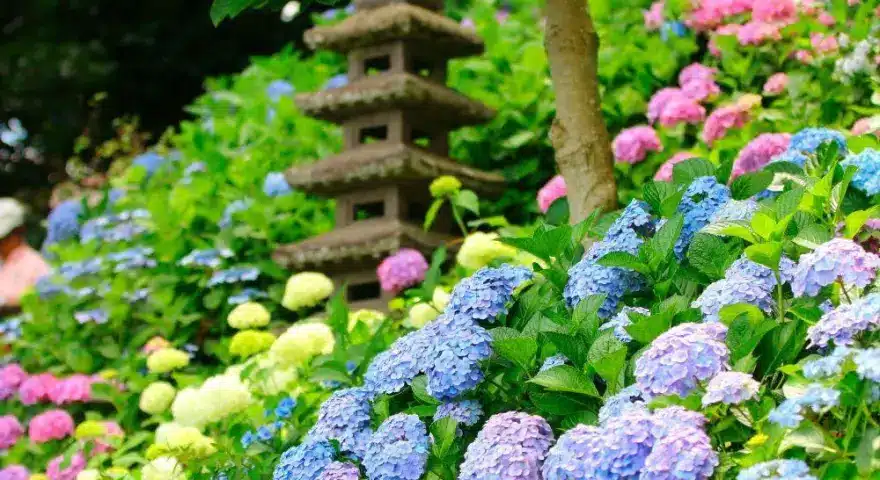
Japan’s rainy season is the perfect season to enjoy the beautiful flowers such as hydrangeas and irises. They appear in temples, gardens, and parks like Meigetsuin in Kamakura and Horikiri Shobuen in Tokyo, which are good places for viewing flowers. Indoor Fun During the Rainy Season
Don’t let the rainy season dampen your spirits. Japan boasts numerous indoor attractions, from museums and art galleries to theaters and department stores. Catch a Kabuki performance at the Kabukiza Theatre in Ginza or explore the enchanting world of the Ghibli Museum in Mitaka.
Escape the Rain in Hokkaido
To be thoroughly away from the rainy weather, go to Hokkaido, which is Japan’s northernmost region. Having a pleasant and arid summer climate, Hokkaido dodges the rainy weather nearly entirely. You are free to sunbath here among nature that features mountains, lakes, and fields of lavender, and gorge on delicious seafood.
Enjoy the Umbrella Sky Festival
The Umbrella Sky Festival is now a summer highlight of Japan’s rainy season. Events take place across the country, including famous festivals at Harunata in Karuizawa and Moomin Valley Park just outside Tokyo. When you visit Japan in June, don’t miss this unique rainy season festival!

FAQ about Japan Rainy Season
Q: How Bad is Rainy Season in Japan
A: The rainy season in Japan is different in terms of how heavy and long it gets, depending on where you are. Of course, the rainy season is not so “bad” but does interrupt plans and tours to Japan because of the rain and humidity all day long.
However, it is worth noting that the rainy season has its charm. Therefore, Japan’s rainy season is not so bad, but if you are prepared and have an open mind, it will not spoil your fun.
Q: How Much Does it Rain in Japan during Rainy Season
A: Rainfall in Japan during the rainy season will vary significantly from place to place and from year to year. By and large, the rainy season lasts from around early June to mid-July, with frequent showers and high humidity. In certain regions, such as southern Japan, the rain can be very heavy and long-lasting, whereas in others, it may be more sporadic.If you’re visiting Japan during the rainy season, expect to encounter some rain.
Q: How to Survive Rainy Season in Japan
A: To survive rainy season, it’s always better to be prepared. Don’t forget to pack or buy an umbrella, spare socks, and a raincoat or poncho, and don’t forget your rainboots or waterproof shoes. While you’re at it, take some time to visit the special sights this season has in store for you. Relax and soak in a rotenburo, grab a book and cafe hop, visit famous tourist spots, and start off with a warm-up of a delicious bowl of ramen.
Related Reading:





