
While summer in Japan often evokes images of fireworks, festivals, and traditional songs and dances, Obon has a different atmosphere and profound significance. With a Buddhist origin, this significant summer festival is for people to honor ancestors and welcome the spirits of deceased loved ones back home. Thus, many Japanese people will take the long Obon holiday to gather with their families and pay respect to their ancestors.
Obon also marks one of the three major holiday seasons in Japan alongside New Year and Golden Week. By then, a 7-15 days holiday will be offered by most Japanese companies. And, a mass movement of people across the country is anticipated to take place by then, resulting in crowded highways, train stations, and airports.
The dates to celebrate the Obon festival in Japan vary by region, typically falling in July or August. Over the years, this highly esteemed traditional festival has developed a series of rituals and customs. This article will just introduce you to the origins of the Obon Festival, its traditions, dates, celebrations in different regions, etc.
What is Obon?
Obon festival marks a time for the Japanese to honor and commemorate deceased loved ones. It is believed that ancestors’ spirits will return to this world and visit their old homes temporarily during this period. Now, it is celebrated as one of the most important festivals in Japan, usually lasting for three days.
During Obon, families will gather to honor their ancestors, visit gravesites, and participate in various rituals and traditional activities to respect their ancestors. Some common festival customs include lighting welcoming fires, setting up altars and placing offerings, visiting graves, holding Bon Odori (traditional dance events), and lighting farewell fires.
In places like Nagasaki, people also float small lantern-lit boat processions on lakes, seas, or rivers at night. They believe this is a way to provide a resting place for the spirits of the deceased loved ones.

Fun Facts about Japanese Obon Festival
- Different places celebrate Obon at different times, usually in mid-August and mid-July
- Wearing the yukata – a casual, summer kimono, is popular during the festival. There are many “rent-a-kimono” shops for tourists to try kimono for one or two days.
- People all dance when celebrating Obon, and different regions may have their own Obon dances.
- Though not a public holiday in Japan, many people use it as an opportunity to return home, making it one of the busiest travel times in Japan.
- There are lanterns and bonfires everywhere, serving as the guiding light for deceased ancestors.
When is the Obon Festival in Japan?
In eastern Japan, like Tokyo, Yokohama, and Tohoku, Obon is celebrated from July 13th to 16th. However, the most common nationwide Obon holiday typically falls from August 13th to 16th. This difference in celebration dates occurred after Japan’s calendar modernization during the Meiji era.
Initially, all regions of the country celebrated Obon around the 15th day of the seventh lunar month, which corresponds to mid-August on the solar calendar. After the Meiji Restoration, Japan adopted the Gregorian calendar. To keep with the traditional lunar date of Obon, some places celebrate the Kyu-bon from August 13th to August 16th. While some places didn’t follow this adjustment but held the Shin-bon (new Obon) from July 13th to July 15th of the solar calendar.
Though not an official national holiday, in practice, most companies will take a few days off for the festival.

Origins and History of Obon
Origin
The origin of Obon is linked to a Buddhist story about Maudgalyayana, one of the Buddha’s closest disciples. According to the Ullambana Sutra, Maudgalyayana used his spiritual powers to search for the soul of this deceased mother, but found her suffering immensely in the realm of hungry ghosts. He then sought the Buddha’s guidance on how to relieve his mother’s suffering. Buddha advised him to make offerings of various foods to the monks on the 15th day of the seventh lunar month. Following Buddha’s advice, Maudgalyayana successfully freed his mother’s spirit. He was so happy and danced to celebrate.
The custom of offering food to ancestors’ spirits was then established. And his dance is believed to be the origin of bon odori.
After the Obon Sutra, along with Buddhism, was introduced to Japan, it merged with Japan’s ancient custom of honoring ancestors during the summer. The Obon Festival was then established.
History of Obon in Japn
- Asuka period: Obon, along with Buddhism, was introduced to Japan from China’s Sui and Tang Dynasties. Celebrated on the 15th day of the seventh lunar month.
- Kamakura period: Emerged with other religious and cultural practices, such as the Hungry Ghost Relief and Lantern Festivals, earning it another name “Festival of Souls.” Regional dances and musical performances were integrated and became integral parts of the celebration.
- Edo period: The festival was extended to three days. Beyond its Buddhist origins, the festival evolved into a customary practice, with a broader range of folk beliefs and customs included.
- After the Meiji Restoration in 1868, Japan adopted the Gregorian calendar. Obon was shifted to around August 15th in most areas, and some regions still celebrate it around July 15th.
Obon Traditions and Celebrations
The ways to celebrate Obon differ in different regions and families. Generally, the common customs observed in most areas include visiting ancestral graves, offering food, lighting paper lanterns and welcoming fires, and participating in bon odori (Obon dance).
Calendar of events for Obon celebrations
- Preparation before Obon: Prepare lanterns, offerings, food, and altar, and clean houses to show respect to ancestors.
- First day of Obon: Hang lanterns, light welcoming fires, and visit graves to invite ancestors’ spirit home. Set up an altar at home and offer fruits, vegetables, flowers, and incense to welcome the spirits.
- Second Day (or 2nd – 3rd days in some areas) of Obon: Continue offering and praying; hold traditional Bon Odori dances; invite a Buddhist priest to their homes—or visit a temple—to recite a sutra and perform a memorial service; after the recital, family members will spend time together, sharing meals and memories.
- The last day: Hang more lanterns and light bonfires to guide spirits back to their graves. Offerings and other items are burned at the graves. Some regions may hold parades, performances, and fire festivals, or release floating lanterns onto rivers and lakes.
House Cleaning
A few days before the Obon begins, people usually clean their homes to show respect to their ancestors. This also symbolizes getting rid of all the negative energy of the family. The Buddhist altar in the family will also be cleaned. Fruits, vegetables, and flowers will also be prepared as offerings in advance.
Light Paper Lanterns and Welcoming Fires
On the first day of Obon, people will bring the lighted paper lanterns to their ancestors’ graves to invite their spirits home. Lanterns will be hung, and welcoming fires will also be lit in front of the home to guide the spirits.

Shōryō Uma: The Spirit Horses
Besides the common fruits and vegetables, people usually prepare distinctive offerings made of eggplants and cucumbers, called Shōryō Uma (The Spirit Horses). The cucumbers are made into the shapes of horses, and eggplants are made into cows. They are symbolic of transportation for ancestors. The cucumber horses are offered on the first day, expressing people’s hope that their ancestors could ride the horses to return home quickly. Eggplant cows are offered on the last day of Obon, because people hope their ancestors can ride the slow-moving cow to carry all the offerings back slowly.
Eat Vegetarian Meals
During Obon, people prepare shojin ryori (Buddhist Vegetarian Cuisine) and place it on the offering table. The family also eats these vegetarian meals three times a day. All the offerings are carefully prepared without using fish or meat. And all the fruits and vegetables should be ready to eat. For example, grapes are washed and placed in bowls, apples or pears are peeled, and snacks are taken out of boxes and placed on plates.
Bon Odori
Bon Odori is a traditional dance performed during Obon. The history of holding Bon Odori during Obon can be traced back to the Heian Period. Initially, it served as a dance to comfort ancestral spirits. And in the following centuries, it gradually incorporated elements of praying for good harvests and entertainment. Typically, there is a dance leader to lead people of all ages to dance. The forms of Bon Odori vary in different regions, but it’s common that people will all dressed in yukatas (summer kimonos) while dancing.

Light Send-off Fires
On the last day of Obon, spirits of ancestors are believed to return to the Western Pure Land. Then, farewell fires and lanterns are lit to guide them back to the afterlife. In some regions, the bonfires create spectacular displays. Also, people bid farewell to their ancestors’ spirits by floating lanterns on rivers and lakes.
Popular Regional Festival Traditions & Events
As mentioned, the ways to celebrate Obon vary in different regions. Below are some of the most recommended places to visit during Obon for their spectacular festival events and festive atmosphere.
Gozan Okuribi Ritual Fires in Kyoto
The ancestors’ spirits are believed to stay with their families until the last day of the Obon, after that, they will return to the other world. To guide them, people usually light “Okuribi” (send-off fires), which is just like welcoming fires. Kyoto’s Gozan Okuribi Ritual Fires is just one of the most famous and significant send-off fire events. Located in a basin, Kyoto is surrounded by five mountains. On the day of the send-off, huge bonfires in the shapes of different characters will be lit on all of these mountains. This offers a spectacular sight during the Obon Festival.

The Spirit Boat Procession (Shōrō nagashi) & Lantern Festival in Nagasaki
In some parts of Nagasaki Prefecture, a floating lantern ceremony (aka “Shōrō-nagashi”) is held every year. During the festival, large “spirit boats” appear on the streets. These boats are nearly 10 meters long and uniquely designed. Some boasts are adorned with large fishing flags, while others are decorated with thousands of origami cranes.
Instead of releasing these boats into the sea, they are carried through the streets due to environmental concerns and usually are accompanied by fireworks and firecrackers. This procession symbolizes sending off the spirits to the port. After the event, the boats will be dismantled and recycled.
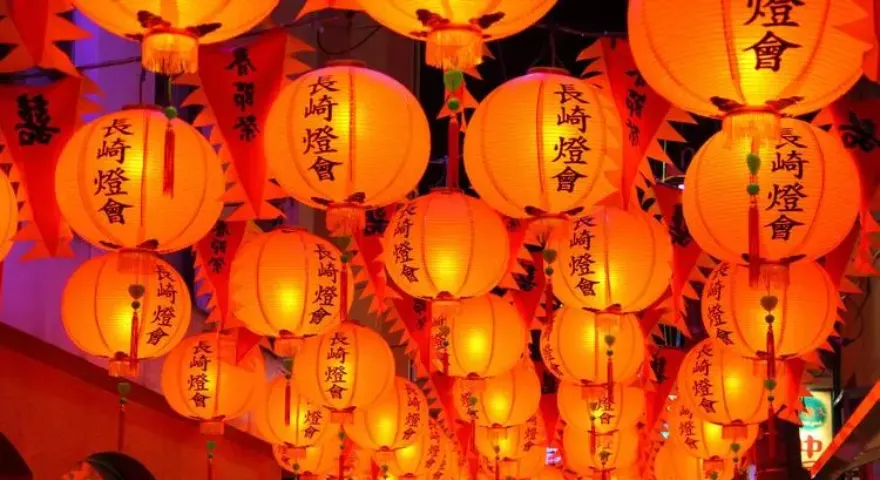
In addition to the Spirit Boat Procession, Nagasaki also holds the “Mantō-nagashi” event (Lantern Festival), with thousands of lanterns softly glowing and floating along the water. This spectacular scene has become one of the most iconic images of Nagasaki’s summer. After the event, certain teams will retrieve the lantern from the water.
Awa Odori Festival in Tokushima City
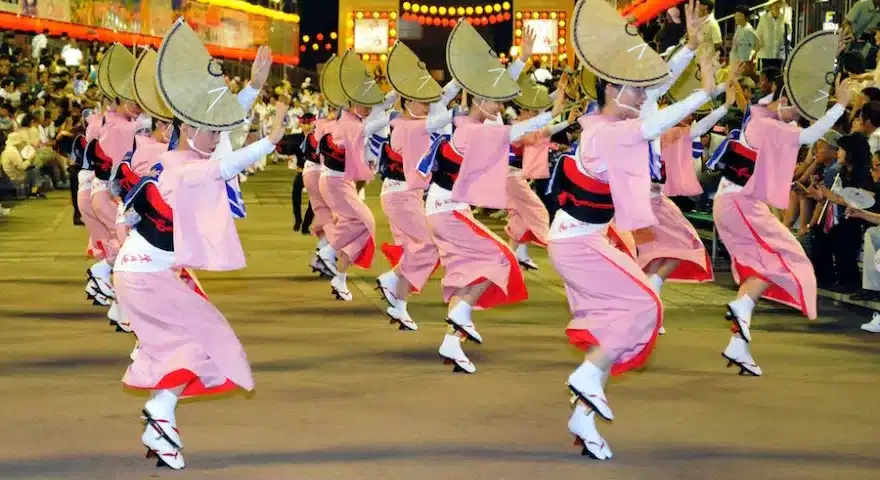
The Awa Odori Festival in Tokushima is one of the most famous cultural events in Japan, lasting from August 12th to 15th. Each year, it draws the attention of people across the country and attracts over one million visitors flock to the streets of the city.
During the festival, major roads are closed to accommodate the event, and spectator seats are provided for visitors to enjoy the dances. Six main stages are set up for dancers to perform. At night, groups of dancers called “Ren” (typically consisting of several dozen dancers) will perform Awa Odori in the city center, with musicians following behind.
More than the dances, numerous street food stalls will line the streets, adding to the lively atmosphere of the city, making it rival the energy of Rio de Janeiro’s Carnival.
Recommended Japan Tours:
- 11 Days Japan Culture Experience
- 9 Days Japan Essence Tour
- 10 Days Japan Cherry Blossom Tour in Spring
Tips for Traveling to Japan During Obon
- Please expect busy transportation between cities during this time.
- Popular temples and shrines are often crowded during Obon, as many Japanese people will visit a shrine or temple to recite a sutra for their ancestors.
- Some privately owned shops and restaurants may close during the festival, but large department stores usually remain open.
- If you visit Japan during the Obon Festival, feel free to join the Bon Odori dances. Tourists are welcome to participate, and it’s a great way to immerse yourself in local culture.
- Please respect the altars and offerings, as they are sacred items for many families.
- The festival is a great opportunity to wear a yukata. If you don’t have one, you can easily rent one from a street shop.
- Plan your visit in advance if you want to join some regional events or festivals, as most of them have specific schedules, and hotels and transportation are usually fully booked during this time.





