
The Tsukimi Festival is mid autumn festival celebrated in Japan. It offers a good blend of old traditions and celestial delights. Tsukimi Festival is a time when people come together with their families and friends under the night sky to enjoy the full moon, which is said to be at its brightest and most alluring. In this article, we will walk you through the history, fun activities, tasty foods, and popular events of Tsukimi Festival.
With the approach of the mid-autumn, you’ll experience the cool wind in the morning and evening hours, which marks the end of the long hot summer. In Japan, it is the period when families gather to thank the harvest and marvel at the shifting seasons. Call it Tsukimi Festival, the more respectful Otsukimi, or simply the Mid-Autumn Festival in Japan, it is a celebration that worships nature and the beauty of the fleeting seasons. Tsukimi Festival is not just about the drama of the spectacle; it is also an occasion for quiet reflection and gratitude.
History of Tsukimi
The Tsukimi Festival, or moon viewing in Japan, revolves around appreciating the full moon on the 15th day of the eighth lunar month, particularly during Mid-Autumn Festival in Japan. This practice, also called Otsukimi, translates to ‘moon viewing’. With its origin in the Chinese Mid-Autumn Festival, Tsukimi is said to have reached Japan during the Tang Dynasty (618-907 AD).
It was originally a popular pastime with the aristocracy, who sat in the moonlight and shared poetry and music. Through the centuries, Tsukimi grew in popularity to become a celebration of the harvest and prayers for rich harvests.
Tsukimi Moon Festival was a festival that began during the Heian period (794-1185). Customs state that it began with the Mid-Autumn Festival from China, where aristocrats got together under the moonlight to enjoy music, recite or make poetry. Some even took boats to see the reflection of the moon.
Aside from that, the Japan Mid-Autumn Festival also has a particular affinity with rabbits. Some believe that a rabbit is engaged in making rice cakes in the moon’s craters. This beautiful and lyrical custom pays special homage to the autumn moon, something that is very much a part of Japanese culture. Just like China’s Mid-Autumn Festival, you’ll find rabbit motifs on Tsukimi products.

Dates of Tsukimi festival
The Tsukimi Festival date in Japan is determined by the traditional Japanese calendar and must be converted to our contemporary Gregorian calendar. Full moon celebrations are traditionally celebrated on the 15th day of the eighth lunar month, and the celebrations for the waxing moon occur on the 13th day of the ninth month. According to our current Gregorian calendar, these dates generally come around in September and October. If you’re planning a trip, mark your calendar for Tsukimi Festival 2025 – it’s an experience worth having!
How the Japanese Celebrate Tsukimi: Traditional Activities
Witnessing the Tsukimi Festival in Japan is a proof of its original and traditional activities.
Below are some of the ways you can join the festival in your Japan tours:
l Moon Observation:
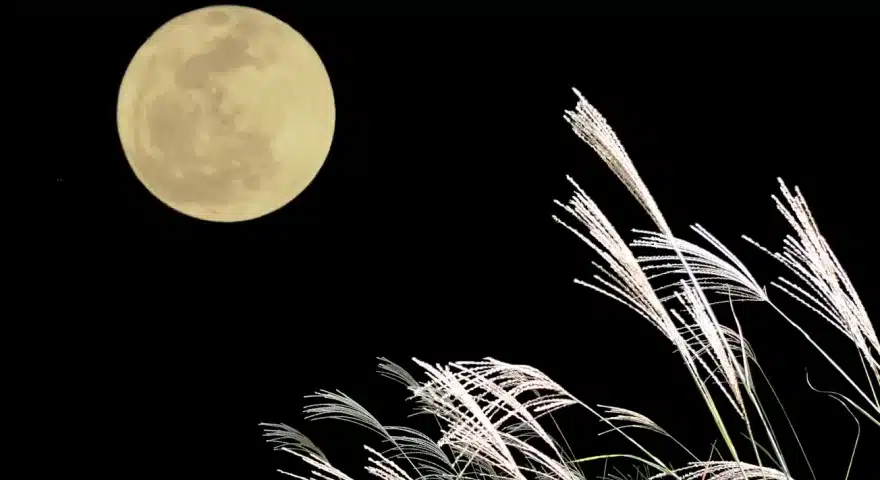
The highlight of the Tsukimi festival is observing the full moon, as it is believed to be brightest and most magical in autumn. Citizens along with their families and friends gather at gardens, balconies, rooftops, or temples to see this collectively. Mid autumn festival in Japan revolves around this celestial phenomenon.
l Prepare Offerings:
As a token of appreciation to the moon and the harvest, offerings of seasonal vegetables and food are prepared. The traditional offering is Tsukimidango, white rice dumplings piled in a pyramid shape, looking like the moon. Some of the other offerings are taro, edamame, chestnuts, persimmons, grapes, pears, and sake . It is a compulsory event in any Tsukimi festival.
l Arrangement and Decoration:
Japanese pampas grass, bush clover, and autumn flowers in a window or on the balcony are used for decoration of Tsukimi celebrations. Offerings and decorations are placed on the south-facing balconies on a regular basis, as directed by direction to the moon deity. This adds to beauty during Mid Autumn Festival in Japan.
l Cultural Events:
Tsukimi Festival is also an occasion for cultural events in respect of the mystique of the moon. Some write or recite poetry, a practice dating back to the Heian period when aristocrats under moonlight shared waka with each other. Haiku or tanka that are reminiscent of the mystique of the moon are currently in vogue.
l Food Enjoyment:
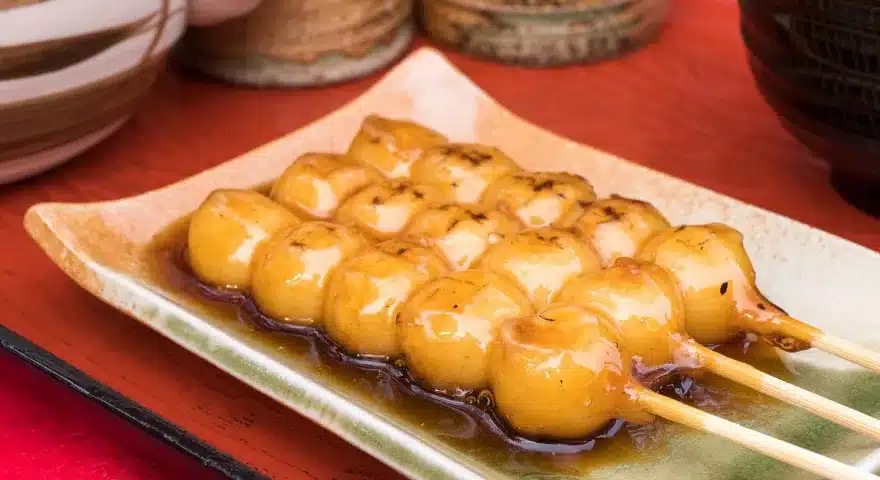
After moon viewing, and offerings, it is customary to enjoy Tsukimi festival food. Tsukimi soba or udon noodles topped with raw egg, symbolizing the moon, are in great demand. Some make glutinous rice dumplings or dango at home, which they serve among family and friends. Don’t forget to have these delicacies during your trip to Tsukimi Festival in tokyo.
Traditional Tsukimi Foods
The Tsukimi Festival was not just full moon gazing for the people being honored in Japan, where it is also called the Mid Autumn Festival in Japan. It was also a time when they enjoyed special Tsukimi Festival food. The fact that something different and traditional was wanted made everyday common dishes inappropriate. New traditions had to be created in order to make the festival unique.
l Tsukimi Dango:
Dumplings in the shape of the moon, prepared from glutinous rice, typically all white but sometimes in a variety of colors and flavors. They are arranged in a pyramid structure as an offering to the moon in appreciation and gratitude during the Tsukimi Festival.
l Rabbit-Shaped Cake (Usagi-zukushi Mochi):
This is a delightful glutinous rice cake (Mochi) shaped into an adorable rabbit. Rooted in the legend of a moon-dwelling rabbit pounding rice cakes, it’s usually filled with tasty treats like red bean paste and sesame. It’s a must-try during the Tsukimi Festival.
l Autumnal Fruits and Vegetables:
These include sweet potatoes, chestnuts, taro, edamame, persimmons, grapes, and pears. They are in season and symbolize nature’s bounty and are eaten or given as offerings during the Tsukimi Festival to thank the harvest.
l Raw Egg Dishes:
Symbolizing the full moon with raw eggs having yolks, these dishes supplement and add flavor to traditional cuisine. Tsukimi Soba, Tsukimi Udon, and Tsukimi Don are all classic examples.
l Tsukimi Burger:
This modern twist features a fried egg along with the burger. It’s a playful take on traditional raw egg foods that appeals to modern palates. During the Tsukimi Festival in Japan, even fast food chains offer this special burger.
Popular Tsukimi Events in Japan
Tokyo Tower Tsukimi Festival
Tokyo Tower lights up especially for the Mid-Autumn Festival in Japan annually, and it makes a great spot to view the harvest moon. The 600-stair climb to the observation deck is worth it for the scenic views. Even from the ground, the tower lit in red against the shine of the moonlight is magnificent. Tokyo Tower is also one of Japan’s well-known proposal spots.
Mikasa Park Moonlit Night – A Tsukimi Festival Favorite
Yokohama’s Mikasa Park lights up its historic structures for Tsukimi, rendering it a renowned moon-viewing location. With several Tsukimi events such as poetry recitals, tea ceremonies, and a lantern festival, it’s not to be missed. Conveniently reached by a 10-minute bus journey from JR Negishi Station.
Ise Jingu Moon Festival
A shrine to the sun goddess Amaterasu, Ise Jingu is one of Japan’s most famous shrines. It is 2000 years old and hosts Tsukimi events in September, including poetry recitals and musical performances. Reach Ise Jingu by train to Kameyama Station on a JR Pass, and then change to Ise City Station.
Tokyo Skytree Moon Viewing
Like Tokyo Tower, Tokyo Skytree in Sumida offers stunning aerial views from its observation decks hundreds of meters high. It’s a perfect place for close-up moon viewing during Tsukimi Festival. With jazz music performed indoors, the festive mood is further enhanced, making it a highlight of Mid Autumn Festival in Japan.
Himeji Castle Tsukimi Festival
Himeji Castle, the “White Heron Castle,” holds a Tsukimi in the autumn that includes tsukimi-dango, oden, sake, and taiko performances. The moonlight is magical, and the castle is architecturally stunning, so it’s a night to remember. Although social distancing will affect some of the events, the beauty will remain.
Recommended Japan Travel Itinerary





