
Japan is a charming Eastern nation where religion is prevalent. Here, Shinto and Buddhism are the two dominant religions and are seamlessly integrated into the country’s culture, art, festivals, and everyday life.
Japanese Buddhism has a history of over 1,400 years. Not like the indigenous Shinto which is as old as the Japanese culture, Buddhism came to Japan in the 6th century from China and the Korean Peninsula. Today, the number of its followers in Japan is closely behind Shinto. And, its influence is evident across various fields of the country, such as architecture, painting, literature, and philosophy. Japan’s cultural symbols, Zen painting, and the tea ceremony are just the remarkable contributions brought by the introduction of Zen Buddhism. And most Japanese hold funerals in Buddhist temples.
In this article, we will introduce you to the history of Japanese Buddhism, its major schools and cultural influence, and must-visit temples during your Japan tour.
History of Japanese Buddhism
Initial Introduction in Asuka Period (6th Century):
Japanese Buddhism belongs to a branch of Northern Buddhism. Its initial introduction can be traced back to the mid-6th century (either 538 or 552 CE, the exact date is debated) when the Kingdom of Baekje (present Korea) gifted Buddhist statues and scriptures to Japan. Despite the intense conflict between pro-Buddhists and anti-Buddhists, Buddhism eventually prevailed and began to spread across Japan.
Prince Shōtoku is a staunch supporter of Buddhism, and he undertook many initiatives to promote Buddhism, such as issuing supportive edicts, establishing temples, personally delivering Buddhist teachings, and strengthening cultural exchanges with Tang China.
Early Development in Nara Period (7th-8th Century):
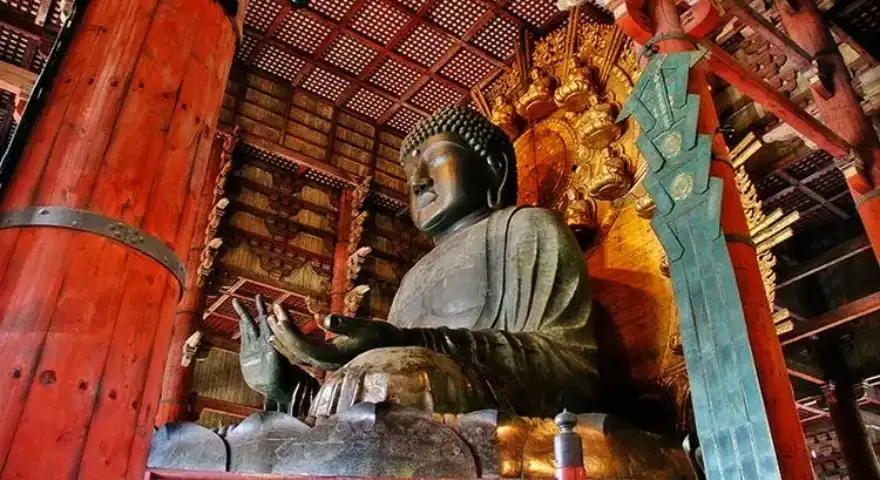
The Nara period (710-794) saw a dramatic increase in the number of temples, and the pinnacle of Buddhist influence in Japan. According to the records, over 360 temples and Buddhist institutions were established during this era. The famous Tōdai-ji Temple and Great Buddha of Nara commissioned by Emperor Shōmu and the Yakushi-ji Temple were all constructed in this period. The “Six Nara Schools” were also a remarkable development in this period.
Emperor Shōmu also invited the Chinese monk Jianzhen to transmit Buddhist precepts at Tōdai-ji Temple and introduce Tang Dynasty’s sculpture, architecture, and other artistic achievements to Japan, contributing to the flourishing of Buddhist art and culture.
In this period, Buddhism was mainly supported by the state and nobility, focusing on praying for the “protection of the nation” and “accumulating blessings to ward off disasters”. It was thus somewhat removed from the common people.
Significant Developments & Formation of New Sects in Heian Period (782 – 1192):
The Heian period (794-1185 AD) was when a close fusion between Japanese Buddhism and noble culture was formed. Following society’s pursuit of spiritual and cultural enrichment in this period, Buddhist thoughts, teachings, and rituals permeated noble life and significantly influenced their behaviors. The rich Buddhist elements in “The Tale of Genji”, a notable Buddhist literary work from this period, are pieces of evidence of the influence of Buddhism on Japanese art and culture.
Buddhist sects were further diversified, seeing the rise of the Tendai and Shingon schools. These new schools marked that Japanese Buddhism began to develop its distinct characteristics, moving away from the direct imitation of Chinese models.
Though still dominated among the aristocracy, some Buddhist festivals and rituals were adopted in common people’s lives in this period. New folk beliefs and religious practices began to blend with native Shinto faith and traditions.
Introduction of Zen Buddhism and Buddhism Localization in Kamakura & Muromachi (1336-1573 AD) Periods
A turning point in Japanese history, the Kamakura period marked the establishment of the samurai government. During this period, Zen Buddhism was introduced to Japan. More new sects that emphasized direct experience and simple faith and rituals also emerged, including Jōdo-shū (Pure Land Buddhism), Jōdo Shinshū (True Pure Land Buddhism), and Nichiren Buddhism. These newly introduced or emerged sects catered to the needs of ordinary people and resonated deeply with the values of the emerging warrior class, making them accessible to more people.
The Muromachi period was when Japan underwent political turmoil and social changes. Newly emerged Buddhist sects during the Kamakura period continued to grow and gained more widespread support. Accompanying the growth of the shogunate’s power, some large Buddhist temples could maintain their own armed forces. Zen Buddhism was further promoted by the shoguns of the Muromachi Shogunate. Its aesthetics were closely with tea ceremony, garden design, painting, etc.

Institutionalization and Popularization in the Edo Period (1603-1868):
During the Edo period, new challenges and opportunities for Buddhism arose due to the emergence of the citizen class. Buddhism became more secular, intertwining closely with people’s everyday lives. Buddhist-style funerals were widespread in the country. Buddhist temples surged in numbers across the country and had a deepened connection with politics. Certain laws were imposed to regulate the activities of Buddhist sects.
Modernization and Secularization of Buddhism from the 19th Century to Present
Following the Meiji Restoration, the Meiji government (1868-1912) implemented policies to promote Shinto as the state religion, and intended to separate Buddhism from Shinto and diminish Buddhist influence in Japanese society.
To adapt to the new environment and challenges, many Buddhist sects began to establish schools and engage in many welfare activities to maintain their presence. These Buddhist schools and institutions also helped Buddhism adapt and integrate into modern society.
Through these modernization efforts, Buddhism successfully retained its core values and significance in people’s daily lives. Today, most Japanese funerals still adhere to Buddhist traditions. And Buddhist practices also merged with traditional ancestor worship.
Main Existing Buddhist Schools in Japan and Their Teachings
Today, Japanese Buddhism encompasses a variety of sects, each of them with unique teachings and practices. Below are some of the main existing Buddhist sects in Japan and their brief introductions.
Tendai Sect:
Originating from China’s Tiantai sect, the Tendai sect was founded by the monk Saichō during the Heian period. It integrates Buddhist thoughts of Esoteric Buddhism, Zen, and Ritsu, and believes all beings can awaken their Buddha nature through practice.
Shingon Sect:
Founded by the monk Kūkai during the Heian period, the Shingon sect believes that individuals can achieve Buddhahood in their current life through proper methods.
Pure Land Sect (Jōdo-shū):
The Pure Land sect was founded by the monk Hōnen in 1175. It believes that one can attain salvation by sincerely chanting Amitabha Buddha’s name (“Namu Amida Butsu”).
Zen Sect:
The Zen sect was originated from India and introduced to Japan through China in 1192 by the monk Eisai. There are two main branches of the Zen sect in Japan: Rinzai and Sōtō. Rinzai focuses on sudden enlightenment through koan meditation, while Sōtō emphasizes seated meditation (zazen).
Nichiren Sect:
Founded in the mid-Kamakura period (16th century), Nichiren Buddhism focuses on active social engagement and addresses contemporary issues. Its followers believe they can practice Buddhism by chanting Lotus Sutra.
Ritsu Sect:
Ritsu Sect was founded by the Chinese monk Jianzhen during the Nara period (645-781 CE). Its followers focus on adhering to precepts (Vinaya) and believe one can purify the mind through this practice.
Cultural Influence of Buddhism in Japan
Due to its long history in Japan, Buddhism has influenced the people’s lives, thoughts, and art for generations, with its impact evident in various aspects of Japanese culture:
For example, “The Tale of Genji” and many classic waka poetries often incorporate Buddhist elements and concepts. The traditional tea ceremony (sadō) was introduced by Zen masters and rooted in the principles of Zen Buddhism. Flower arranging (ikebana), and martial arts (kendō) are also popular arts influenced by Buddhist principles. And, Buddhist sculptures and paintings have played a significant role in enriching the traditional arts of Japan.
Representative temples with intricate design and construction, like the Tōdai-ji in Nara and Kinkaku-ji in Kyoto, are enduring examples of Buddhist influences in Japanese architectural art.
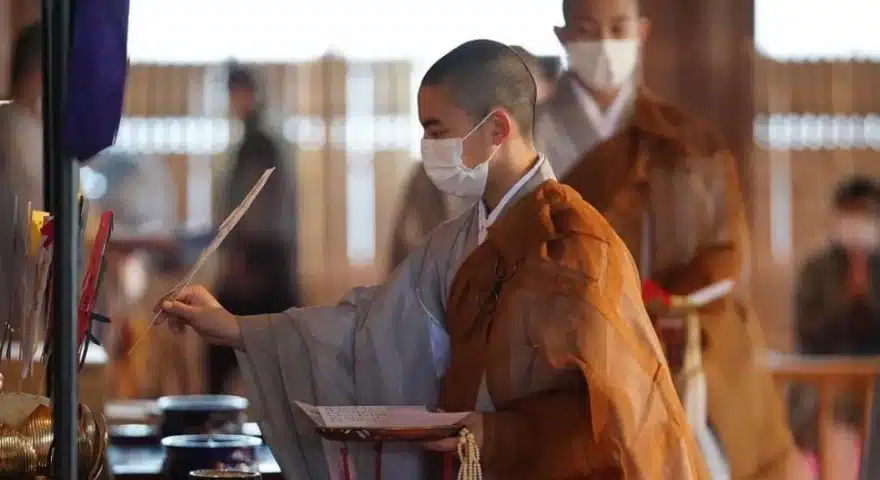
Typically, temples serve as sacred places to confront life and death. People usually conduct a Buddhist chanting ceremony when their loved ones or families pass away.
On some special occasions, such as New Year’s Eve, anniversaries of relatives’ deaths, and Buddha’s birthday, many Japanese people will visit temples to worship or take part in ceremonies in temples.
Shinto Vs. Buddhism
Shinto and Buddhism are both the main religions in Japan. Due to centuries of syncretism, many Japanese people identify as both Buddhists and Shintoists. Different from religious perspectives in many Western and other Eastern nations, they just view religion as part of their customs and habits, and follow religious traditions during certain ceremonies.
At first glance, Shinto shrines and Buddhist temples often seem similar, but distinct differences do exist in architecture, deities worshipped, and worshipping. Below are differences between Shinto and Buddhism:
- Traditionally, people hold wedding ceremonies in churches, seek blessings for newborns in Shinto shrines, and conduct funerals in Buddhist temples.
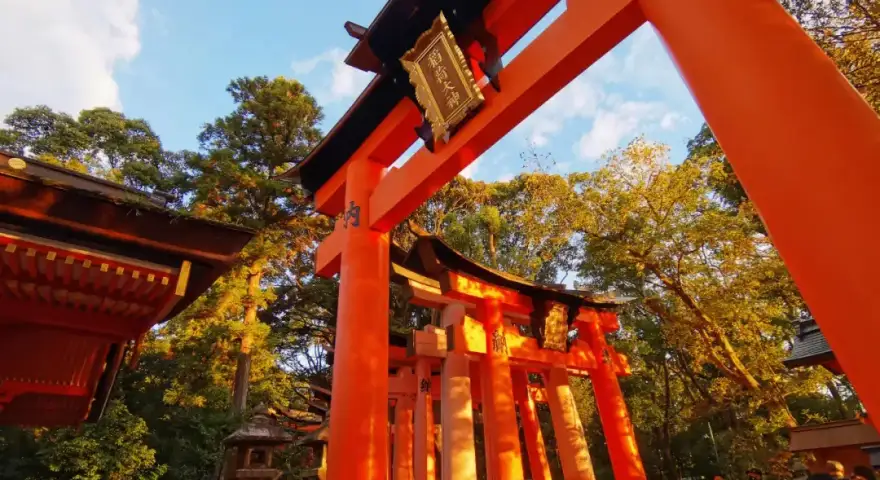
- From the outside, temples usually have tombstones, while shrines have torii gates.
- Buddhist temples are where monks and nuns study and practice Buddhism, enshrining statues of Buddhas. While the staff in Shinto shrines are called Shinto priests or kannushi. And what enshrined in shrines are native Japanese deities, such as Amaterasu-Ōmikami, and spirits of the deceased. Unlike the visible Buddha statues in temples, deities in shrines are usually represented by sacred objects (go-shintai) and are not visible to the public.
- The methods of worship are also different. In temples, after offering incense and money, worshippers can conclude their homage by placing hands together in a prayer gesture. While in a shrine, worshippers can bow twice, and clap hands twice before making an offering, then bow once more to conclude the ritual.
Must-Visit Buddhist Temples in Japan
It is a good idea to arrange some temple visits on your trip to Japan. The traditional worship rituals, ceremonies, charming architectural styles, picturesque locations, and serene environments will together offer you a memorable and enriching experience. There are about 75,000 temples and over 300,000 Buddhist statues scattered around the country, mostly located in Kyoto, Nara, and Kamakura. The oldest wooden temple in the world and the oldest Buddhist manuscripts are both preserved in Japan. See the top Japanese Buddhist temples below:
Kiyomizu-dera (Kyoto)
The oldest temple in Kyoto, Kiyomizu-dera Temple was initially constructed in 778. Then in 1633, Tokugawa Iemitsu reconstructed the structure based on its original architectural methods. The temple is the top choice for most visitors to Kyoto and is best known for its suspended Kiyomizu Stage, Otowa Waterfall, autumn foliage, and cherry blossoms. In 1994, the temple was listed as a UNESCO World Heritage site.
- Opening Hours: 6 a.m. to 6 p.m. Can visit at night on special events.
- Location: 1-294 Kiyomizu, Higashiyama-ku, Kyoto, Kyoto Prefecture, Kinki, Japan
Senso-ji (Tokyo):
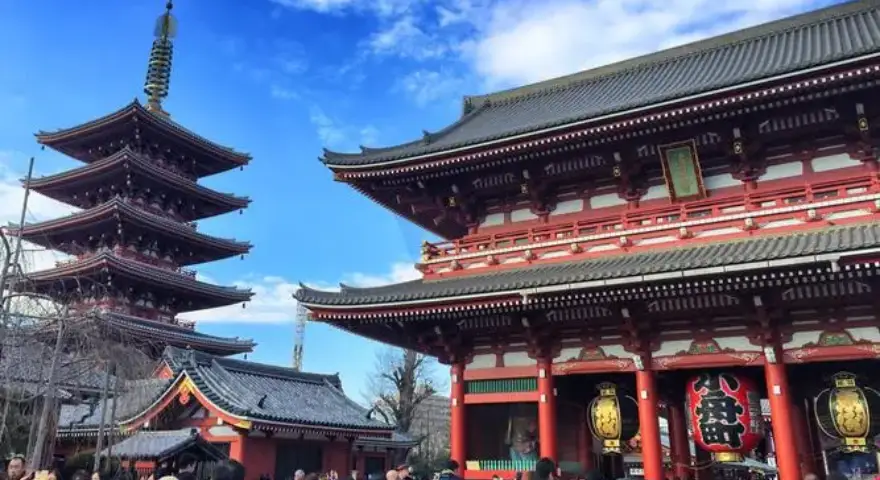
This oldest temple in Tokyo is symbolized by its iconic “Thunder Gate” (Kaminarimon) with a giant lantern hanging on it. Standing as an example of Edo-style entertainment, Senso-ji Temple is a vast temple complex, housing multiple famous structures and historic buildings, such as the main hall, and the five-story pagoda.
- Opening Hours: 6 a.m. to 5 p.m.
- Location: 2-3-1 Asakusa, Taito, Tokyo, Tokyo Prefecture, Kanto, Japan
Kinkaku-ji (Kyoto):
Aka the Golden Pavilion, Kinkaku-ji is a Zen Buddhist temple that was originally built in 1397. Another UNESCO-listed temple in Japan, it highlights the Shariden (reliquary hall) which is adorned entirely with gold leaf. The Shariden is a three-story pavilion alongside the mirror-like Kyoko-chi pond. Each floor of the pavilion shows a distinct architectural style across different periods.
Currently, visitors are only allowed to take photographs from the surrounding areas, but not to enter or climb the structure.
- Opening Hours: 9 a.m. to 5 p.m.
- Location: 1 Kinkakujicho, Kita-ku, Kyoto, Kyoto Prefecture, Kinki, Japan
Tōdai-ji (Nara)
Tōdai-ji Temple in Nara was constructed by Emperor Shōmu in the 8th century. It is home to the largest wooden building in the world, the Great Buddha Hall, and the Great Buddha (Daibutsu) which stands as one of the largest bronze statues in the world and the symbol of Nara.
- Opening Hours: 8 a.m. to 4:30 p.m. in winter, and 7:30 a.m. to 5 p.m. in summer
- Location: 406-1 Zoshicho, Nara, Nara Prefecture, Kinki, Japan
Hōryū-ji Temple (Nara)
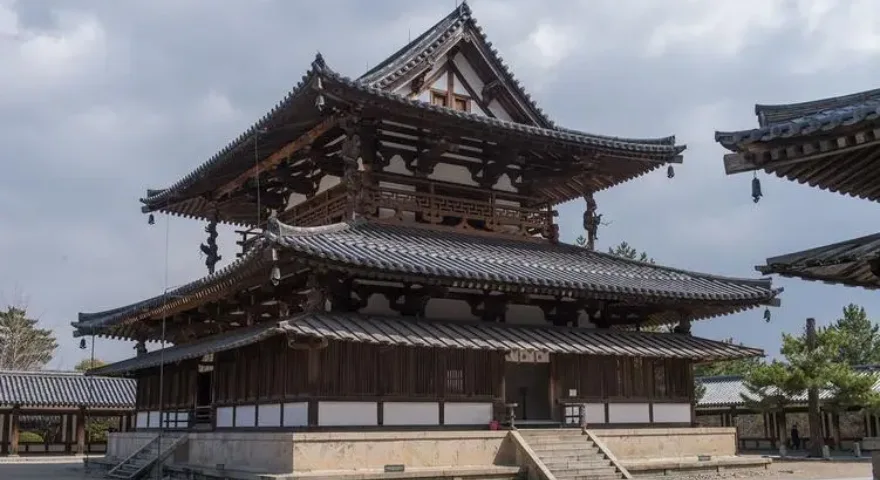
Established in 607 by Prince Shōtoku, Hōryū-ji Temple houses one of the oldest wooden structures in the world and was included in the UNESCO World Heritage Site list in 1993.
Beside the wooden main hall, the temple also features the oldest five-story pagoda in Japan, Yumedono (Hall of Dreams), and Yumedono (Hall of Dreams). All these structures feature a blend of unique Japanese architectural styles with techniques from China’s Northern and Southern Dynasties. The garden layout is recognized as an original innovation of Japan which has influenced many other temples.
- Opening Hours: 8 a.m. to 5 p.m.
- Location: 1-1 Hōryūji Sannai, Ikaruga, Ikoma District, Nara
Shitennoji Temple (Osaka)
Established in 593 by Prince Shōtoku, Shitennoji Temple in Osaka is recogmized as the oldest state-sponsored temple in Japan and the birthplace of Japanese arts and crafts. It is named after Four Heavenly Kings of Buddhism, and features the Shitennō-ji-styled architecture.
Its main structures, including the central gate, a five-story pagoda, main hall (Kondō), and lecture hall (Kōdō) are arranged in a straight line. Though has been reconstructed several times, it still maintains the Asuka period grandeur.
- Opening Hours: 8:30 a.m. to 4 p.m.
- Location: 1-11-18 Shitennoji, Tennoji-ku, Osaka, Osaka Prefecture, Kinki





